Realist Phenomenology
Realist as opposed to transcendental; this is a stream within the phenomenological movement and tradition and research, ‘yeah we’re still doing phenomenology but we’re doing it much closer to empirical research and we don’t care about transcendental, a priori conditions; we’re going to focus on stuff in psychology, sociology, etc., without doing the extra that some philosophers like doing with the transcendental questions’
First in German, Realphenomenologie, this isn’t about plausibility in the real world (all phenomenology is correct); it’s realist because it takes events as real without a universal epoché, without suspending the beliefs in the existence of these things.
Last lecture, prof. showed some passages concerning passive synthesis; there are a few things that are important for realist phenomenology that we can take from that body of lectures without having to buy the whole thing.
The notion of affection is important; there is a certain pull that objects can have, which is just one way to rethink the subject-object relation - which usually takes the subject to be doing something, and the object just lying there, doing nothing.
Indeed, the call resounds as well with respect to the side that is already actually seen: “Draw closer, closer still; now fix your eyes on me, changing your place, changing the position of your eyes, etc. You will get to see even more of me that is new, ever new partial colorings, etc. You will get to see structures of the wood that were not visible just a moment ago, structures that were formerly only viewed indeterminately and generally,” etc. Thus, even what is already seen is laden with an anticipatory intention. It-what is already seen-is constantly there as a framework prefiguring something new; it is an x to be determined more closely.
(APS)
There is a sense in which we begin to understand. not reflectively or intellectually, with no influence of psychology or philosophy, that we gain an understanding that the sights that we are seeing are the sights of an x, an object x, that is not beyond those sights, but is not fully determined; an object whose sights those are.
There is not a thing in itself, x, and all we ever see are appearances; we are seeing the x, but only in increasingly being able to learn more of it.
There is an affection exerted by objects/environments.
This has to do with psychological research; research on “motivation”: the idea of “if-then” relations that are not causal.
If I see a door-handle, it invites me to do pulling it and opening door with it; but I don’t have to do that - I could also take a chainsaw to the door and get out that way. Thus, I am motivated to open the door with the handle, but that’s not a causality.
The handle is not a cause in this context, and it doesn’t determine my action causally, as I always have the freedom to act otherwise.
In some social psychology this is also talked about as “affordances”: certain objects or environments afford certain actions.
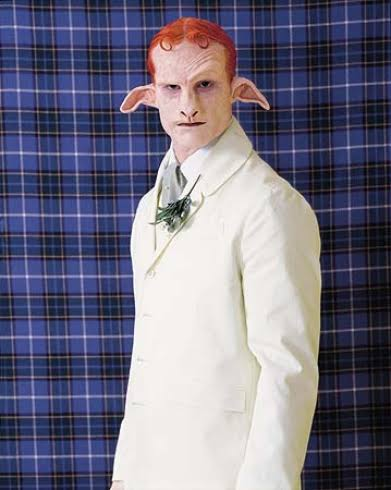
Matthew Barney: “Cremaster Cycle”
Used to be Bjork’s partner; nuts video art, but if you like that stuff it’s fun to watch. He has also done some installations that explicitly make thematic the ways in which affordances work by playing with them.
In the serious “Drawing Restraint,” he’s trying to draw (or, in some cases, paint), but do it in a way that he is free to do (as he is not caused to paint in a particular way), but use his freedom in a way that is really going against the affordances.
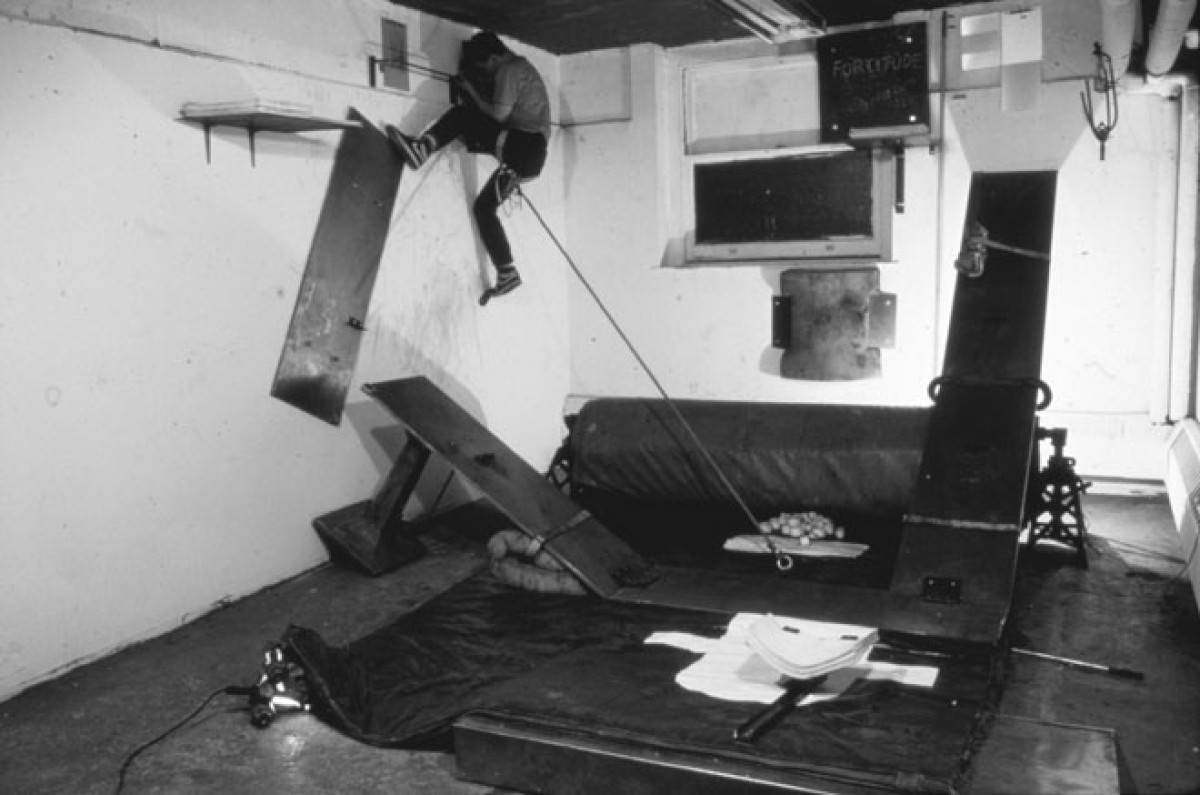
Motivation vs. causality is very important when we think of Throwing Like a Girl.
Heidegger
He’s a Nazi.
Prof. wants to give a range of different phenomenological approaches; they all share a family resemblance, you don’t really need to subscribe to some specific points, tick some boxes to become a ‘phenomenologist.’
Phenomenology is a method.
Heidegger:
The expression ‘phenomenology’ signifies primarily a methodological conception. This expression does not characterize the what of the objects of philosophical research as subject-matter, but rather the how of that research. (Being and Time)
Husserl:
Thus, the term ‘phenomenology’ expresses a maxim which can be formulated as ‘to the matters themselves’ [orig: to the things themselves, but ‘matters’ to avoid confusion with noumenal things] it is opposed to all free-floating constructions and accidental findings; it is opposed to taking over any conceptions which only seem to have been demonstrated; it is opposed to those pseudo-questions which parade themselves as ‘problems’, [shared concern with Wittgenstein; they think that the need to prove things-in-themselves is useless and stupid] often for generations at a time. Yet this maxim, one may rejoin, is abundantly self-evident, and it expresses, moreover, the underlying principle of any scientific knowledge whatsoever. Why should anything so self-evident be taken up explicitly in giving a title to a branch of research? (Being and Time)
The epoché is not doubt, or a rejection; but it is a willingness, as far as one is able to, to put into question, in order to reconsider, deliberately, which can also lead to an endorsement of certain aspects or dimensions.
Heidegger continues this maxim: “one may rejoin, is abundantly […]” - this was Husserl’s point to begin with; how is philosophy a science? why should philosophers be paid to do research and be paid at a university? if all they do is reflect on life in some way, maybe they should write fiction… For Husserl, the question is “What is the legitimacy of academic philosophy?” His demand for evidence, and the challenging of what, up to know, was agreed upon, is something that is not specific to philosophy. Only if philosophy does it too, can philosophy say that it is the ‘mother of the sciences’; for that statement to be true, it first has to become a science.
Depending on the constellations within which you think and work, for some phenomenological insights you might say, “well, yeah”; but it’s about making what’s already familiar implicitly, explicit.
What we do in phenomenological philosophy, is drawing new attention to what we are already familiar with; in order to bring it to light, in order to get a new look at it. This is something shared across basically all different phenomenological approaches.
Phenomenology is our way of access to what is to be the theme of ontology, and it is our way of giving it demonstrative precision. Only as phenomenology, is ontology possible. In the phenomenological conception of “phenomenon” what on has in mind as that which shows itself is the Being of entities (das Sein des Seienden), its meaning, its modifications and derivatives. And this showing-itself is not just any showing-itself, nor is it some such thing as appearing. Least of all can the Being of entities ever be anything such that’ being it’ stands something else ‘which does not appear’. ‘Behind’ the phenomena of phenomenology there is essentially nothing else; on the other hand, what is to become a phenomenon can be hidden. And just because the phenomena are proximally and for the most part (zunächst und zumeist) not given, there is need for phenomenology. Covered-up-ness (Verdecktheit) is the counter-concept to ‘phenomenon’
(Heidegger)
We’re going to get to see a cool German rap song, which uses the Heideggerian ‘das Sein des Seiendes’.
The Being is not an entity, but a way/mode of being. The Being of entities is the way in which they are what they are. It’s the how of the what.
In the epoché, you could also say that your attention is directed not only to what something is, but how it is what it is.
Heidegger sees the thing-in-itself as something behind appearances; hence his statement that the noumenal is stupid because there is nothing behind appearances.
Then again, phenomenology is not just about appearances (as is commonly misunderstood). We are always involved with the matters we are investigating, and the target of our investigations is to know more about them, but not as a kind of conspiracy as to “what is really behind them.”
Heidegger’s notion of truth: the problem isn’t that appearances stand in the way between us and things, but that the way that things manifest themselves to us, the way we experience them “proximally and for the most part” (most of the time, without thinking about it), they appear in such a way that we can be misled about what they really are.
Our perspective from a particular tradition, or even the very nature of the thing of showing itself as something hard for us to understand can mislead us.
You notice things mostly when they aren’t going properly(/so well).
“Covered-up-ness is the counter-concept to phenomenon” → the concept of truth that Heidegger uses, “aletheia” (ἀλήθεια), is not just a fact about what is; it is a process partly about truth-making/truth-discovery, but also in terms of the phenomena themselves (think again about affection from objects asking to be looked at) - there is a sense in which objects conceal themselves, a sense in which truth involves the effort of unconcealment.
The truth as a process of unconcealing, disclosing. (Unverborgenheit, Erschlossenheit).
Heidegger thought that in a single reflection on a tool we can find a fundamental difference to the way we engage objects, the environment, and each other (persons). This is the distinction between the ready-to-hand, and present-at-hand. Zuhanden and vorhanden.
The Being of those entities which we encounter as closest to us can be exhibited phenomenologically if we take as our clue our everyday Being-in-the-world, which we also call our “dealings (Umgang)” in the world and with entities within-the-world. Such dealings have already dispersed themselves into manifold ways of concern (Besorgens).
We ask questions about whether something functions only when they fail;
Language can be ready-to-hand, or present-at-hand, in gradations.
If you are very self-conscious about language, it is more present-at-hand; if you can just use it without thinking, it is ready-to-hand.
When the hammer breaks, you have to ask yourself - “What else can I use? Can I fix it?”
Being-in-the-world always necessarily means being engaged with das Zeug.
Taken strictly, there ‘is’ no such thing as an equipment.
There is no single thing that is a Zeug; it can only be a tool in relation to users, but also in relation to other equipment.
Zeughaftigkeit - ‘equipmentality’ is a mode of being, and all kinds of things can attain that mode of being. It is a mode of being and a mode of engagement, which we can adopt in relation to anything we want.
The distinction between
”here are certain things, and this is what they are”
and a question about “how does it manifest, what is its being? what does it do? what are its dynamics, its relevance, its context?”
The latter has been crucial for a wide range of feminist philosophers. Partly as a tool against the biggest targets of feminist thinking - essentialism, and naturalism.
Iris Marion Young
Generally seen as a political philosopher, a lot of people don’t know she’s also a phenomenologist.
(referring to Beauvoir’s thoughts)
Every human existence is defined by its situation; the particular existence of the female person is no less defined by the historical, cultural, social, and economic limits of the situation. (p. 142)
I. M. Young does not talk about ‘tool-being’ directly, but throwing a ball is kinda like that; when one talks about throwing like a girl, they probably aren’t thinking about javelins, hammers, discs, etc.
I take “femininity” to designate not a mysterious quality or essence that all women have by virtue of their being biologically female. It is, rather a set of structures and conditions that delimit the typical situation of being a woman in a particular society, as well as the typical way in which this situation is lived by the women themselves. (p. 144)
This, of course, going contrary to the (still-common) view that there is a (biological, necessary) essence to femininity.
The three modalities of feminine motility:
- Ambiguous Transcendence
- Inhibited Intentionality
- Discontinuous Unity
The ideas that I. M. Young introduces are relevant to more than just feminism.